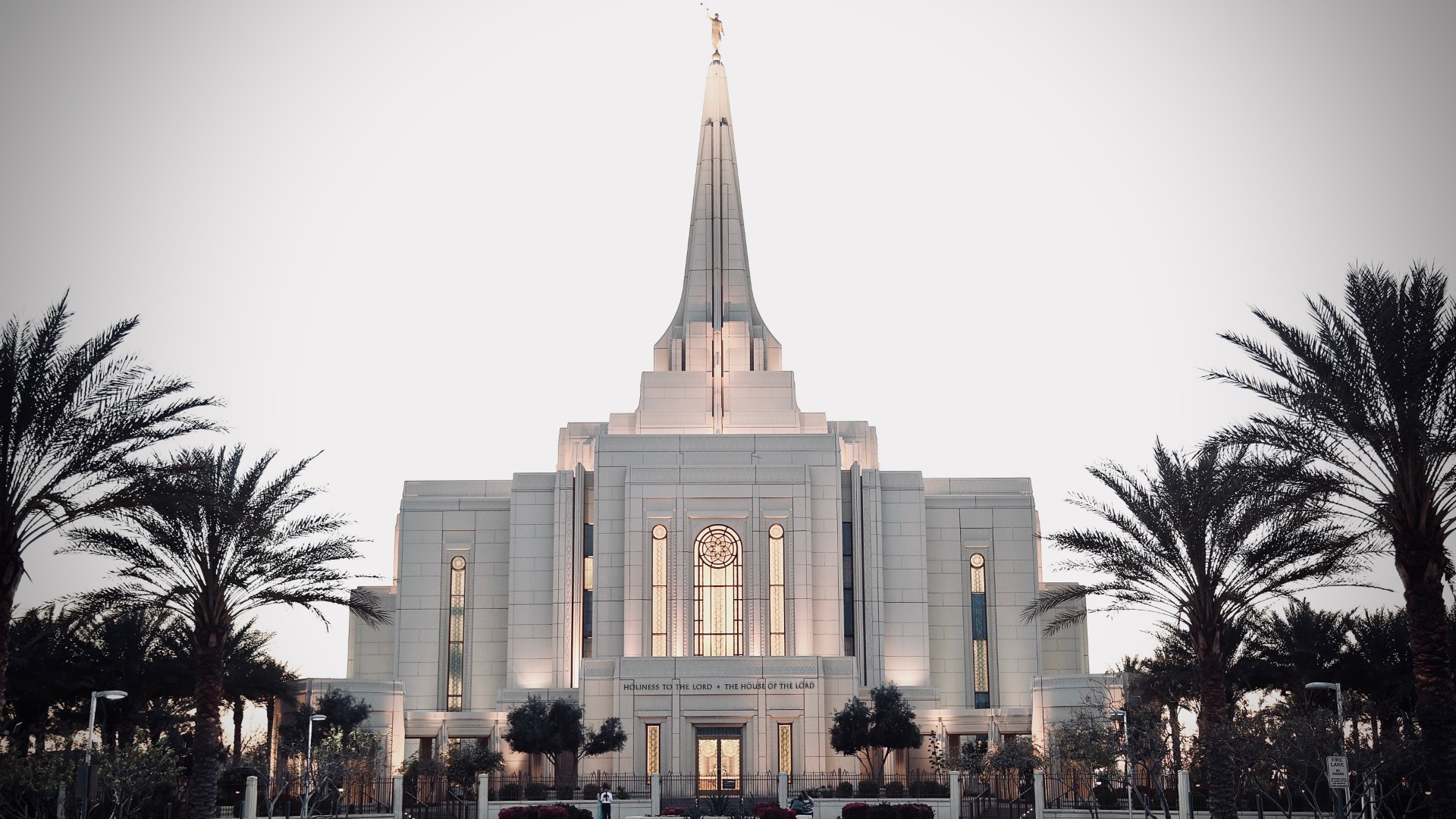

Greg Koukl and Amy Hall explain why Revelation 22:18 is not a good argument against the Book of Mormon, then they outline the early church’s criteria for recognizing Scripture and describe how the Book of Mormon fails these standards.
Transcript
Amy: All right, let’s go to a question from Allie. Recently, some Mormons came to my door. I quoted Revelation 22:18 when pressed about why I didn’t think the Book of Mormon was divinely inspired. They responded with, “That verse doesn’t apply to the whole of the Bible, but rather John was specifically talking about Revelation.” How would you respond?
Greg: I think they’re right. Now, that doesn’t justify Mormonism, but I think that’s an inappropriate use of that passage. When you read the words of the passage, it doesn’t say the whole corpus of Scripture. When that was written, there was a corpus of Scripture that did exist, and the divinely inspired books were divinely inspired the minute the ink hit the parchment, even if people didn’t recognize it. But the verse itself says—and this is where I want Christians to be careful. By the way, this verse has been used many times in this way. I get it. All right, so here I am at the text. Verse 18 and verse 19: “I testify to everyone who hears the words of the prophecy of this book.” Well, the author is restricting what follows to this revelation. And he says, “If anyone adds to them, God will add to them the plagues which are written in this book. And if anyone takes away from the words of the book of this prophecy,” etc., etc. So, it’s almost as if you read the verse the way that was just suggested by Allie, that you are kind of adding a meaning to the text that is not intended by the author, and you don’t want to do that. It refers to Revelation, and that’s all. And I think there are much better ways to deal with Mormonism. We don’t disqualify their books because of that verse. We disqualify them on theological grounds.
You know, I wrote a piece on the canon. I think it was November 2024. Yeah. It’s called The New Testament Canon: Which Books and Why. And there are three tests, or three factors, that were involved in recognizing authoritative Scripture by the early church. One was apostolic. And when I say apostolic, it isn’t any old Joe who calls himself an apostle or elects himself as an apostle. It’s those who were trained by Jesus—those ones who Jesus promised the Holy Spirit would bring to remembrance everything I’ve taught to you and will guide you into all the truth. This is the Upper Room Discourse. And so, that’s Jesus acknowledging, “You’re the guys we can count on.” So, “canon” simply means “rule.” What is the authoritative rule?
Now, when Jesus was around, it was the Old Testament that Jesus acknowledged, and Jesus himself was the authority, okay? And then he passed that authority to the disciples, and the early church understood if any text was written by an apostle, part of the apostolic band—which, by the way, would include Paul because Paul wasn’t part of the original band, but Jesus did appear to him and taught him, and Galatians chapter 1 makes this point, and the others—Peter, James, and John—received him and gave him the right hand of fellowship. So, Paul would be in that. If any of those people wrote a book, the early church simply accepted it as authoritative, whatever they said. Now once they died, it was the writings that they left behind. And the writings had to be apostolic—they had to have apostolic authority—and whatever might be in question had to be orthodox. And when I say “orthodox,” that means whatever they weren’t sure about, they tested against what they were sure about, and that’s the apostles’ writings.
And so, I mean, just by those two tests, all of these Mormon so-called revelations fail. It was not written by the original band of apostles who were authorized by Jesus. It was provided by people who made themselves into prophets and apostles or whatever. And secondly, it’s not orthodox. It does not fit the doctrine, which they know and they acknowledge, which is why you have an LDS church—the Church of Jesus Christ of Latter-day Saints. “We’re the Latter-day Saints because the gospel was lost, and now we’re restoring it. We’re the true church.” So, even though they make a lot of noise like, “We’re really Christians like you’re Christian,” that is not really what their doctrine teaches. So, I’m just making the point that their teaching is disqualified because it doesn’t satisfy the requirements that the early church had for canon—which canon, by the way, the Mormon church acknowledges as legitimate. And they usually read the King James Bible, but nevertheless, I don’t care. But they acknowledge the Scripture. So, their new views have to match with Scripture, or they don’t satisfy the requirement of orthodoxy, and they’re off the reservation. And what do they appeal to in return? An emotional experience with the Book of Mormon. That’s it.
Amy: Of course, Greg, they would say that, since Jesus did visit the Americas, that he did train the writers of the Book of Mormon.
Greg: But that’s circular, though, because what’s in question is the authority of the Book of Mormon in the first place. And they can’t even go to that book as historically sound because there’s no evidence that it is.
Amy: And that is the problem. I think, if somebody asked me, “Well, why don’t you think the Book of Mormon is inspired?” I would say, “Because I have no reason to think it is.” I don’t have to prove it isn’t inspired. You have to show me that it is. And the problem I have is that it fails the test of history—just the very basic thing that what it’s describing as history doesn’t match actual history, so why should I think it’s inspired? And then if they offer the test of reading it and experiencing a burning in the bosom, I would say, “Look, we both agree the Bible is inspired. And there are two tests there. Deuteronomy 13 says if a text or a prophet teaches a god who is different from our God, then he is accursed. And Galatians 1 says if anyone, even an angel of light, teaches a gospel that is not our gospel, then he is to be accursed. So, what we need to do is look at the LDS god and gospel and see how those things match up with the Bible’s God and gospel. And if they do, then it’s possible that the Book of Mormon is inspired, and we’ll look at that. If they don’t, then I already know the Book of Mormon is not inspired. But as of now, I don’t have a reason to think so. I don’t have to disprove it.”
Greg: Incidentally, you mentioned history. I only learned this relatively recently. I’d say within the last 10 years or so. I was riding back to the airport from New Orleans Baptist Seminary after a conference, and there was a fellow that was in the car, also a presenter, and he presented on Mormonism, and he told me something that really surprised me. In the Book of Mormon, you have horses pulling chariots. Now, the reason that is significant is because in that period of time—allegedly the period of time that’s covered by the Book of Mormon—there were no horses in America. They were not native to America. They were brought over by the Spaniards. And there were no wheels. Sometimes you’ll see horses dragging sleds—you know, a Native American depiction in a movie, yeah, no wheels—dragging sleds because they didn’t have the wheel in North America. So, here you’ve got horses in North America with chariots with wheels. This is completely anachronistic for that period of time in that country. It’s just false.
Amy: There are a lot of problems with the Book of Mormon. So, I would recommend checking out Mormonism Research Ministry. And I’m sure they have a lot of information about problems with the Book of Mormon. But again, they have to make their case to you. So, I would start with that.