Christianity is falsifiable. That doesn’t mean it is false. It means it can be tested and shown to be false. Here’s one test: Demonstrate Jesus didn’t rise from the dead and—that’s it—game over (1 Cor. 15:17). Christianity would be disproven. Falsifiability is not a liability, though. On the contrary, if it isn’t possible to show a religion, philosophy, or belief is false, then it’s hard to take it seriously.
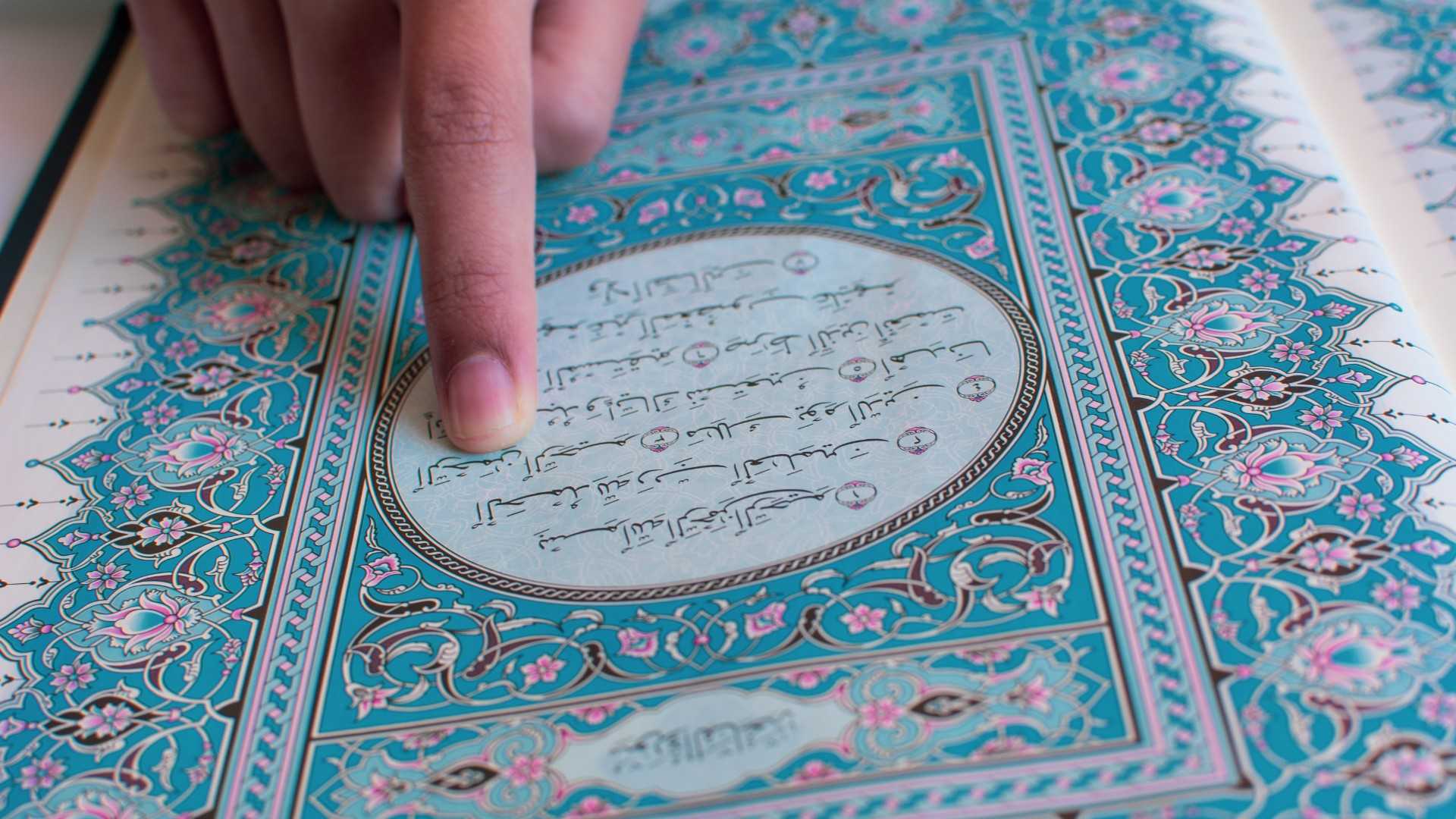
What about Islam? Does the Quran—believed to be the literal words of Allah—make any falsifiable claims? According to Muslims, yes. A popular claim is that the Quran is inimitable, meaning it can’t be imitated. According to Muslims, the Quran contains linguistic and literary features that make it so beautiful, poetic, and perfect that no mortal could produce literature that matches it. If humans can imitate its literary quality, then it’s not from God. According to Muslims, no one can imitate the Quran, and this proves it is written by Allah.
Muslims are obligated to defend this falsifiability test because the Quran claims to be inimitable. Surah 2:23 (“surah” means chapter) challenges skeptics of the Quran’s divine origin:
And if you are in doubt about what We have sent down [i.e., the Quran] upon Our Servant [i.e., Prophet Muḥammad], then produce a surah the like thereof and call upon your witnesses [i.e., supporters] other than Allah, if you should be truthful.
In surah 10:38, the challenge is repeated, because apparently skeptics thought Mohammed invented the Quran’s verses:
Or do they say [about the Prophet], “He invented it?” Say, “Then bring forth a surah like it and call upon [for assistance] whomever you can besides Allah, if you should be truthful.”
Similar challenges are made in surah 11:13 and 17:88. Muslims elaborate by claiming the Quran is the most supremely beautiful, poetic, and linguistically perfect book. The point is simple: If you think the Quran is man-made, then produce a chapter like it. Since no one can produce literature as beautiful and perfect as the Quran, this proves the Quran’s divine authorship.
Muslims believe this challenge is insurmountable. As an example, they cite surah 108—the shortest surah—and claim no one can produce a chapter as beautiful and perfect as one that is only three lines long. Read surah 108 yourself:
Lo! We have given thee Abundance;
So pray unto thy Lord, and sacrifice.
Lo! it is thy insulter (and not thou) who is without posterity.
I know what you’re probably thinking. Big deal. That’s not amazing. To be fair, Muslims claim you can’t appreciate this surah’s perfection unless you read it in Arabic and in the context of its surrounding chapters. Then you’ll hear the rhyme, detect the meter, and appreciate the magnificence of these three sentences. Perhaps, but it seems there are at least five problems with this inimitability argument.
First, this falsifiability test is only useful for a small percentage of people in the world. Although Muslims claim the Quran is a divine revelation intended for all peoples and nations, it can only be understood by people who can read Arabic. That’s because Islamic theology teaches that the Quran only exists in Arabic. Once it’s translated into another language, it’s no longer a Quran. The problem is that only about 5% of the world’s population—and only 20% of Muslims—can read and understand Arabic. Not to mention the Quran is not written in Modern Standard Arabic, but in seventh-century Classical Arabic, which most modern Arabic speakers are unfamiliar with. Therefore, the falsifiability test has very limited application.
Second, the inimitability argument doesn’t logically follow. Just because a piece of literature is the most beautiful, that doesn’t mean it’s divine. Suppose Shakespeare’s Hamlet was widely accepted as the most beautiful, perfect, and unreproducible literature in history. That wouldn’t prove Shakespeare is divine. If Michaelangelo’s Pietà or David were considered the most beautiful, perfect, and unreproducible art pieces, we wouldn’t conclude that Michaelangelo is divine. Producing something that is the best, most beautiful, or unreproducible doesn’t support the conclusion of divine origin. It might indicate a person has a God-given skill, but that’s not the same as being divine.
Third, although Muslims affirm the Quran is a masterful work of Arabic literature, many people contest this claim. Theodor Nöldeke (1836–1930), a German orientalist scholar known as one of the founders of the field of Quranic studies, had a command of Semitic languages like Arabic, Hebrew, Aramaic, Syriac, and Ethiopic. He describes the Quran as “decidedly prosaic” (ordinary, lacking poetic beauty), its “syntax betrays great awkwardness,” and its persistent use of rhyme leads to “gross negligence of the rhyme.” He concludes that it is “by no means a first-rate performance.”
Gerd Puin, also a German orientalist, was hired by Yemen’s government to study the famous Quranic manuscripts discovered in Sanaa’s mosque (a finding equivalent in significance to the discovery of the Dead Sea Scrolls). An expert in Arabic paleography—the study of ancient Arabic scripts—Puin does not believe the Quran is a masterpiece of clear and perfect literature. In fact, he says that despite the Quran’s repeated claims to be clear (Surah 12:1, 15:1, 26:2, etc.), “every fifth sentence or so simply doesn’t make sense…a fifth of the Koranic text is just incomprehensible.” That’s a stinging assessment.
No doubt Muslims would push back on the opinions of these men. They might claim these orientalists aren’t granting the Quran the credit it deserves because they’re not Muslim. This response, however, points to another problem.
Fourth, the inimitability claim is subjective. The Quran says, “Produce a chapter like it.” Like what? Produce a chapter with the same rhyme, grammar, meter, rhetorical devices, emotional impact? The Quran doesn’t provide a set of criteria, so how can you even attempt to duplicate it? I don’t mean to suggest that there isn’t an objective standard to determine whether a piece of writing is good or uses known poetic devices. However, it’s debatable whether a piece of literature is the most perfect and beautiful in all human history, which is what Muslims claim about the Quran. Who adjudicates whether any writing surpasses the alleged perfection of surah 108? Only Muslims? The Quran’s challenge doesn’t appear to be an objectively falsifiable test.
Fifth, perhaps there is equal or better literature. For example, there are many examples of literature that could be considered equal to or more perfect and beautiful than surah 108. What about Psalm 23?
The Lord is my shepherd;
I shall not want.
He makes me to lie down in green pastures;
He leads me beside the still waters.
He restores my soul;
He leads me in the paths of righteousness
For His name’s sake.
Yea, though I walk through the valley of the shadow of death,
I will fear no evil;
For You are with me;
Your rod and Your staff, they comfort me.
You prepare a table before me in the presence of my enemies;
You anoint my head with oil;
My cup runs over.
Surely goodness and mercy shall follow me
All the days of my life;
And I will dwell in the house of the Lord
Forever.
That’s beautiful. This psalm evokes imagery of an idyllic green pasture in perfect harmony with a loving God who’s there to guide and protect you. It is emotionally intimate yet profoundly theological. Many people might say it’s perfect.
What about Shakespeare’s Sonnet 18?
Shall I compare thee to a summer’s day?
Thou art more lovely and more temperate:
Rough winds do shake the darling buds of May,
And summer’s lease hath all too short a date;
Sometime too hot the eye of heaven shines,
And often is his gold complexion dimm’d;
And every fair from fair sometime declines,
By chance or nature’s changing course untrimm’d;
But thy eternal summer shall not fade,
Nor lose possession of that fair thou ow’st;
Nor shall death brag thou wander’st in his shade,
When in eternal lines to time thou grow’st:
So long as men can breathe or eyes can see,
So long lives this, and this gives life to thee.
In only 14 lines, Shakespeare manages to incorporate themes of beauty, love, time, mortality, and immortality. What about William Blake’s “The Tyger,” John Keats’s “To Autumn,” or the countless other examples that literary experts could suggest trump the Quran? This to say nothing of the plethora of non-English literature that could be considered to surpass the Quran: Dante’s Divine Comedy, Wang Wei’s “Deer Park,” or Sappho’s “Ode to Aphrodite.”
Again, the point is that while we have objective standards to measure poetic devices, how you adjudicate the most beautiful literature ultimately comes down to subjective evaluation. There are plenty of experts who wouldn’t put the Quran in the top spot. Therefore, without clear, objective criteria, the Quran’s challenge is effectively unfalsifiable.
The purpose of the inimitable argument is to establish the Quran as Allah’s word so that Muslims can declare Islam to be the only true religion. Their goal is to have Islam enter every household in the world. That’s not conjecture. It’s the repeated goal of Muslim leaders.
As Christians, we should understand this challenge and its problems so we’re prepared to engage Muslims with the truth. Our goal is to answer their apologetic arguments with sound reasoning, better arguments, and the gospel. Addressing this challenge helps to fulfill that goal.