
Muslims claim you don’t have the words of Jesus in your Bible. While I was visiting a large mosque in Atlanta, a Muslim scholar argued that although Jesus is a prophet of Allah, his words aren’t captured in his native tongue. Jesus spoke Aramaic, the Gospels were written in Greek, and you’re reading his words in English. You’ve lost the Word of God to changes, additions, and translations. By contrast, the scholar continued, Allah revealed the Quran to Mohammed in Arabic, Mohammed recited the Quran in Arabic, and Muslims read the Quran in Arabic. Unlike the New Testament, there are no changes or additions to Allah’s words.
Do Muslims have a valid point? Have we lost Jesus’ words? Does our Bible not qualify as the Word of God? While there is some truth to what Muslims claim, here are three problems with their argument.
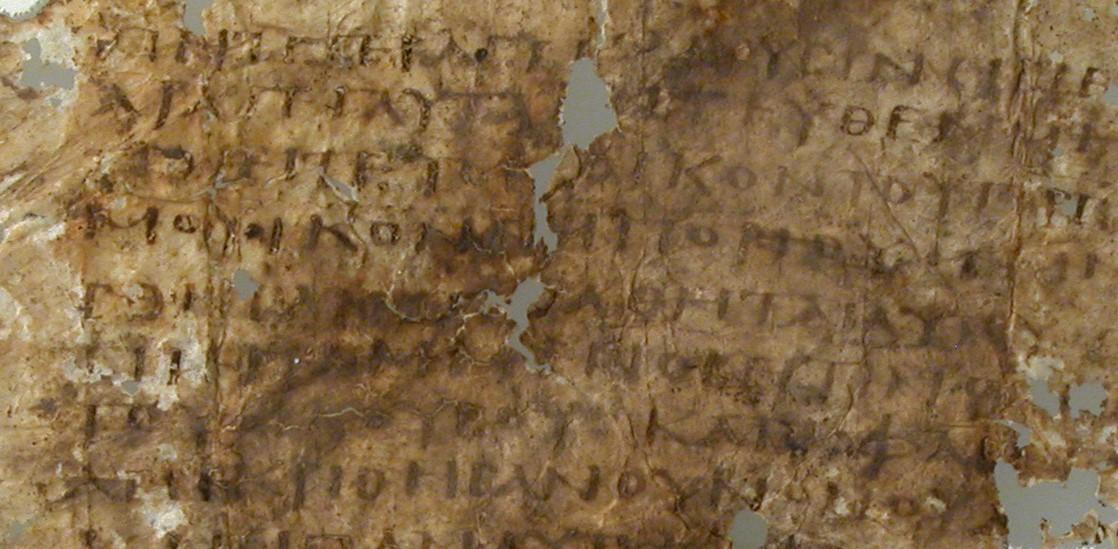
First, it is an advantage, not a liability, that the New Testament was written in Greek instead of Jesus’ own languages of Aramaic and Hebrew (though he probably also knew Greek since he grew up in a region where it was spoken). Greek was the lingua franca of the day and was widely used in trade, education, and daily life in the eastern part of the Roman Empire. By the first century, it was a shared language for people of different backgrounds. In fact, the Old Testament was translated into Greek (the Septuagint) to make it more accessible to people who didn’t speak Hebrew. Therefore, writing the New Testament in Greek ensured that its message would reach far and wide throughout mixed congregations and to different nations.
Second, the Quran fails the Muslims’ own standard. While it’s true that the Bible does not record Jesus’ words in his native tongue, Muslims fail to see how their Quran follows the same pattern. Moses—also a prophet in Islam—spoke Hebrew, but the Quran records his words in Arabic. David spoke Hebrew too, yet his words in the Quran are also in Arabic. Abraham probably spoke Akkadian or some early Semitic language, and it’s unclear what languages Jonah or Adam spoke, but all these “prophets of Allah” are recorded in the Quran speaking a language that was not their native tongue. In fact, the Quran even records the words of Jesus in Arabic—a completely different language than his native tongue. The Quran, then, has the same “liability” as the Bible.
Third, this objection imposes a Muslim standard on the Bible that Christianity does not require. The confusion arises from the difference in each religion’s claims about how their respective holy books were transmitted by God. According to Islam, the Quran contains the literal words of Allah. It is a book from Heaven whose contents were dictated word for word in Arabic by the angel Gabriel to Mohammed. There is no human element in the Quran. That’s why if you translate it into another language, you must add human words to its message, thereby corrupting the Quran by diluting it with words that Allah never spoke.
That’s not what Christians believe about the Bible, nor does our theology necessitate that the Bible be dictated word for word by God. According to Christian theology, the Bible is the inspired Word of God. The doctrine of inspiration teaches that the Holy Spirit guided human authors to write their message using their own style, language, and grammar. Second Peter 1:21 describes it this way: “Men moved by the Holy Spirit spoke from God.” The words they penned were precisely what God intended them to write. In other words, the Bible is a joint human and divine project. Therefore, Muslims miss the point when they fault the Bible for containing words crafted by humans. Christian theology teaches that God intentionally used human authors to produce Scripture. That may not be what Islam claims about the Quran, but God is free to use this method in producing the Bible.
Furthermore, the Bible tells us that “all Scripture is inspired by God” (2 Tim. 3:16). The English word “Scripture” is translated from the Greek word graphe, which means “writing.” That means God inspired the words penned on papyrus, even though they weren’t necessarily the exact Aramaic words that came out of Jesus’ mouth. To be sure, Jesus’ words are divine. Scripture, however, is what the biblical authors wrote down—in the case of the New Testament—using Greek words. Yes, there’s a mismatch between the language Jesus spoke and the language in which the Gospels are written, but that’s only relevant to some Muslims. Christian doctrine does not require the language to match.
As Islam grows in the U.S., it will become more common for Muslims to raise theological challenges. Christians need to get grounded in what they believe and why. Muslims are here to stay, and their challenges to our convictions are just beginning.